Menu

In Clinic Consultation Fees

First Consultation (within 30 min)

$245 and above

Long First Consultation (within 30 - 60 min)

$345.00 and above

Follow-up Consultation (within 30 min)

$165.00 and above

Long Follow-up Consultation (within 30-60 min)

$245.00 and above

Emergency Consultation (W/IN 30 min)

$385.00 and above

Emergency Long Consultation (W/IN 30-60 min)

$550.00 and above

Wound dressings professional fee (excludes consumables)

$132.00 - 228.00 (depends on complexity)

Additional clinic-based Duplex ultrasound assessment

$150.00 - $320.00 (depends on complexity)

Specialist Medical Report

$200.00 - $ $330.00 (depends on complexity)

Laser Treatment Fees

Vbeam Laser (limited to 30 shots/session)

$650 and above

Vbeam Laser (Package of 5 + 1)

$3,250 and above

Gmax Laser (per affected area/session)

$650 and above

Gmax Laser (Package of 5 + 1)

$3,250 and above

Q-Switch Laser (per affected area/session)

$650 and above

Q-Switch Laser (Package of 5 + 1)

$3,250 and above

Out of Clinic Consultation Fees

Hospital In-patient Consultation (Ward)

$380.00 and above

Hospital In-patient Consultation (ICU)

$550.00 and above

Emergency Consultation Fees

A&E during Clinic hours

$380.00 and above

A&E after Clinic hours but before 12 Midnight

$480.00 and above

A&E after 12 Midnight

$550.00 and above

A&E Weekends & PH

$550.00 and above

* All prices are in Singapore currency, exclude Goods & Service Tax are accurate as of 1st Jan 2025 onwards. Prices may change accordingly.

Book Appointment

Please fill in your personal details and we will get back to you regarding your appointment.

Book Appointment

superficial laser treatment for spider veins

Spider Veins Treatment

What are spider veins? Spider veins are little pink or purple irregular lines that you saw in the legs. They are sometimes called telangiectasia. The...
Fill in your personal details and we will get back to you regarding your appointment.
Home|Chronic Foot Wounds

Chronic Foot Wounds

chronic foot wounds

What are Chronic Wounds?

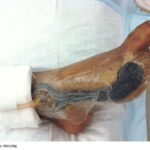
Chronic wounds are wounds that do not heal in an orderly and timely manner, as most acute wounds would. Wounds that do not heal over a long time (about 3 months), are often considered as chronic.

Chronic wounds can cause patients severe emotional and physical stress and create a significant financial burden over the long term.

Our clinic provides comprehensive, up-to-date and evidence-based wound healing management therapies. Dr. Tang Tjun Yip has been previously certified by the American Board of Wound Management (ABWM).

Your hard to heal wound will be evaluated carefully and a customised individual treatment plan will be developed to optimise wound healing trajectory for you.
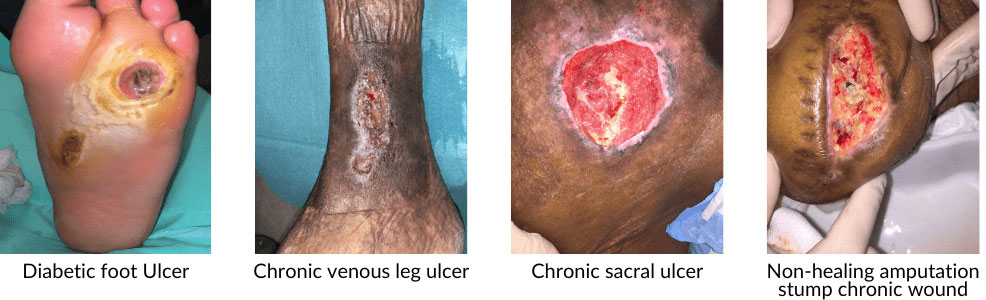
Types of Chronic Wounds Our Doctors Treat:

chronic wounds overview
  • Diabetic leg and foot ulcers
  • Ischemic/Arterial Ulcers
  • Venous leg Ulcers
  • Pressure Ulcers (such as in the sacral and heel regions)
  • Non-healing surgical wounds such as on the abdomen and leg
  • Infected Wounds
  • Traumatic wounds
  • Gangrene

Why Should I See a Specialist?

Chronic wounds can impact one’s quality of life and cause emotional distress. Delaying treatment for chronic wounds may lead to further complications, such as infections and late-stage gangrene which may require amputation.

Early diagnosis and treatment by a specialist is crucial to prevent such complications.

How are Chronic Wounds Treated?

The principles to successful wound healing include using the TIME principle: Tissue debridement, Infection control, Moisture balance, and Edges of the wound. After these general measures have been addressed, treatment is specific to the wound type:

Patients with arterial ulcers should have interventions such as balloon angioplasty to improve blood supply to the region. Treatment of venous ulcers involves compression bandaging and elevation of the legs and exercise if tolerated.

Diabetic foot ulcers are managed by offloading the foot and, if necessary, treating the underlying peripheral arterial disease. Pressure ulcers are managed by offloading the affected area.

Other principles of successful management include:

  • Treating and preventing secondary infection of the wound.
  • Debridement by removing dead skin and tissue from the wound bed and surrounding area. This will promote wound healing by changing the wound from a chronic form to an acute one.
  • Applying appropriate dressings impregnated with medicated gels or antibiotics to treat and prevent infection.
  • Atypical non-healing wounds will be biopsied to check if there is an underlying malignancy.
  • Optimising blood sugar control in patients with diabetes.
  • Regular monitoring and dressings of the wound.
  • Topical pain management –There is a strong need for better pain treatment in chronic wounds. Local treatment with sustained release local anaesthetic is showing promise. Particularly in the patients with severe wound pain, any treatment that would eliminate or delay the need for systemic opioids would be very beneficial.
Type of Chronic Wound Common Cause Typical Location Why Vascular Assessment Matters
Diabetic Foot Ulcer Diabetes-related nerve damage, poor circulation, pressure points or minor injuries that go unnoticed. Sole of the foot, toes, heel or areas exposed to repeated pressure. Diabetic foot ulcers may worsen quickly if blood flow is poor, increasing the risk of infection, gangrene and amputation.
Venous Leg Ulcer Chronic venous insufficiency, venous reflux or long-standing leg swelling. Usually around the ankle, especially the inner ankle. Treating the wound alone may not be enough if underlying venous disease is causing persistent swelling and high vein pressure.
Arterial Ulcer Poor blood supply due to narrowed or blocked arteries, often related to peripheral arterial disease. Toes, feet, heel or outer ankle. Arterial ulcers may not heal unless blood flow is restored through vascular treatment such as angioplasty, stenting or bypass surgery.
Pressure Ulcer Prolonged pressure over bony areas, especially in patients with reduced mobility. Heel, ankle, hip, buttock or lower back. Vascular assessment helps determine whether poor circulation is also delaying healing, especially in high-risk patients.
Non-Healing Surgical Wound Infection, diabetes, poor circulation, wound tension or impaired immunity. At or around a previous surgical incision site. Persistent surgical wounds may require assessment for infection, tissue viability and adequate blood supply to support healing.

Treatment Options at Our Clinic:

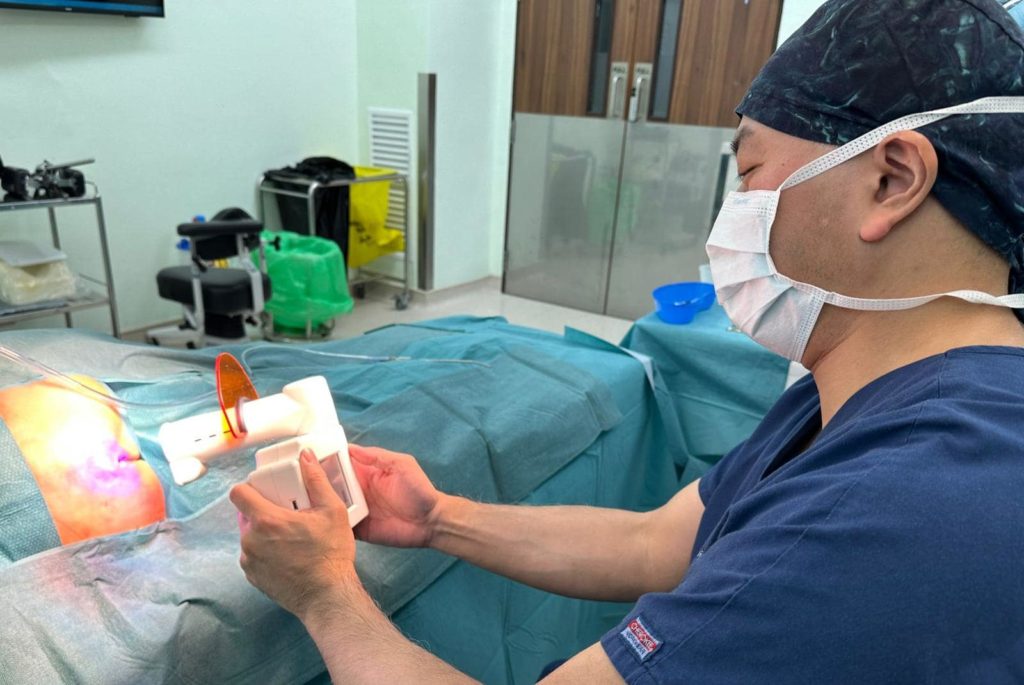
Photobiomodulation therapy involves the use of photons from specific frequencies of the visible light spectrum to stimulate the wound healing process. The use of blue light (wavelength 400-450 nm) in particular has been shown to have anti-inflammatory properties, reducing bacterial load and promoting the tissue regeneration process particularly in venous leg ulcers.

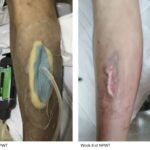
NPWT is a special wound management device used for complex larger open wounds. It uses gentle suction (negative pressure) via a wound dressing and a small electrical pump to help wounds to heal faster.

NPWT helps wounds to heal by:

  • Maintaining a moist wound environment
  • Removing excess fluid and infectious material
  • Reducing swelling
  • Promoting blood supply to the wound
  • Promoting healthy tissue to grow

Granulox is designed to provide wound bases with supplemental oxygen through facilitated diffusion (Figure 1). Granulox aims to provide topical, and hence extrinsic, oxygen supply via diffusion to promote healing. It has been shown to overcome the amount of exudate that chronic wounds make when applied to the wound bed directly after cleaning.

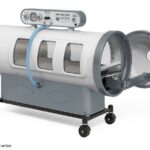
Hyperbaric oxygen therapy (HBOT) involves breathing 100% oxygen at an ambient pressure within a special chamber. It has been recommended as a useful adjunct for patients with wounds that fail to respond to standard wound care. HBOT has been shown to be effective in improving wound healing and against severe infection, especially in the setting of diabetic foot ulcers. In diabetics the small vessels within the foot are sometimes too small to open with balloon angioplasty and therefore if the blood cannot reach those areas near the toes, oxygen from outside down a pressure gradient can sometimes be an effective substitute.

Natrox™ topical oxygen therapy (Inotec AMD Ltd, Hertfordshire, UK) employs a small battery-powered “oxygen generator” to concentrate atmospheric oxygen and feeds pure, moist, oxygen through a fine, soft tube to a dressing-like “oxygen distribution system”, which is placed over the wound and is held in place by a conventional dressing. This has proved highly satisfactory from the patient perspective and has helped reduce time to complete healing with some difficult diabetic foot wounds from our OTONAL study data from Singapore. This may be used instead of HBOT, when some patients cannot tolerate the pressure within the oxygen chamber.

This technology stimulates the motor neurones within the nerve bundle, that carry signals to the muscle fibres to cause contraction within the leg muscles causing the veins in the leg to empty intermittently. This has been shown to be effectively to heal some chronic venous leg ulcers and diabetic foot wounds.

Split-thickness skin grafting is sometime carried out to cover wounds with a large defect. It is a surgical procedure which involves removing the top layer of skin from one area of the body, usually the thigh, and moving it to cover the wound defect. The top layer from the donor site normally heals without an issue as the skin graft taken is very thin in nature. Skin grafting has been shown to increase the healing rate of diabetic foot ulcer and minimise complications such as major lower limb amputation.

Why Do Some Wounds Fail to Heal?

Normal wound healing depends on healthy blood circulation, adequate oxygen supply, good nutrition and the body’s ability to fight infection. When one or more of these processes is disrupted, healing may slow significantly or stop altogether.

Common reasons why wounds become chronic include:

  • Poor arterial blood flow reducing oxygen delivery to the wound
  • Chronic venous insufficiency causing blood to pool in the legs
  • Diabetes affecting both circulation and nerve function
  • Infection delaying tissue repair
  • Persistent pressure over the wound
  • Swelling (oedema) around the affected limb
  • Smoking, which reduces oxygen delivery
  • Poor nutrition
  • Kidney disease or weakened immunity

Many patients have more than one contributing factor, which is why a comprehensive medical assessment is often required.

A wound may fail to heal because it is not receiving enough oxygen and nutrients, has become infected or is affected by an underlying medical condition. Common causes include diabetes, peripheral arterial disease (poor blood circulation), chronic venous insufficiency, pressure injuries, smoking and poor nutrition. A comprehensive assessment can help determine why healing has been delayed.

A wound should be assessed by a doctor if it has not shown significant improvement after two to four weeks, repeatedly breaks down after healing, becomes larger instead of smaller, develops increasing pain, redness, swelling or discharge, or shows signs of infection. Early treatment may help prevent more serious complications.

Yes. Healthy blood flow delivers oxygen and nutrients needed for tissue repair. If the arteries are narrowed or blocked, or if the veins are not functioning properly, wounds may heal very slowly or not at all. Assessing blood circulation is an important part of evaluating chronic wounds, particularly those affecting the legs and feet.

Although not every chronic wound can be prevented, the risk can be reduced by managing diabetes effectively, maintaining good blood circulation, stopping smoking, exercising regularly, wearing appropriate footwear, checking your feet daily if you have diabetes and seeking early treatment for cuts, blisters or skin ulcers. Managing venous disease and leg swelling can also help prevent venous leg ulcers.

Although all three are chronic wounds, they have different causes. Diabetic foot ulcers are associated with diabetes, nerve damage and poor circulation. Venous ulcers result from chronic venous insufficiency, where blood pools in the leg veins due to damaged valves. Arterial ulcers develop when poor blood flow from narrowed or blocked arteries reduces the oxygen supply needed for healing. Accurate diagnosis is essential because each condition requires a different treatment approach.

Treatment depends on the underlying cause of the wound. It may include wound cleaning and debridement, advanced wound dressings, antibiotics for infection, compression therapy for venous ulcers, pressure offloading for diabetic foot ulcers and procedures to improve blood circulation when poor arterial blood flow is preventing healing. A personalised treatment plan offers the best chance of successful healing.

If left untreated, some chronic wounds—particularly diabetic foot ulcers and arterial ulcers – can become severely infected or develop gangrene, increasing the risk of amputation. Early diagnosis and prompt treatment by a vascular specialist can often prevent complications and improve the chances of limb preservation.

You should seek medical assessment if your wound has not healed after two to four weeks, continues to enlarge, develops increasing pain, swelling or discharge, or occurs on your foot if you have diabetes. A vascular specialist can assess whether poor blood circulation or venous disease is contributing to delayed healing and recommend appropriate treatment.

Our Doctors

Senior Vascular & General Surgeon

MBChB, FRCS(Glas), FRCS(Eng), FRCS(Gen), FAMS

Senior Vascular & General Surgeon

MA Honours, MB BChir (Distinction in Surgery), MRCS Glas, MD (Cambridge), FRCS (Gen); FAMS; CWSP